
Climate change
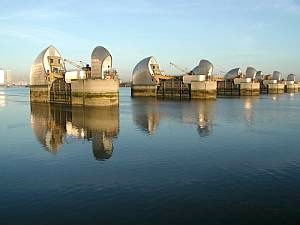
There is now evidence that increasing concentrations of some gases in the atmosphere as a result of human activity over the past 200 years are leading to a warming of the atmosphere. The gases concerned are carbon dioxide (CO2), nitrogen gases (NOx), methane (CH4) and chlorofluorocarbons (CFCs). The first three of these occur in nature but their levels in the atmosphere have been increased by human activity; the CFCs are a result of human activity. These gases are often referred to as greenhouse gases since the effect on the earth is somewhat like being in a greenhouse.
That is, incoming solar energy is able to reach and heat up the earth's surface but reflection of part of this back into the upper atmosphere, which would normally happen, is now restricted by the gases in the layer above the earth.There have been a number of attempts to predict the changes in temperature, rainfall and sea-level that are likely to occur due to climate change. Predictive models into which are fed some of the best available information are used to forecast future trends. If atmospheric levels of greenhouse gases continue to rise, then it is estimated that average global temperatures will continue to increase. The Intergovernmental Panel on Climate Change (IPCC) predicts that global warming of between 1.4° and 5.8°C will occur by the year 2100. Global warming has far reaching effects, one of which is the effect on the world's ice sheets. The melting of these could lead to a sea level rise of 0.09-0.88m by 2100. Rainfall is more difficult to predict but it is expected that many countries will receive less rain than at present. It is also likely that rainfall in many areas will become more torrential. Most attention so far has been given to predicting global changes. It is currently not possible to infer with any accuracy the regional changes.