Why do soils differ?
There are many different soils worldwide and even within an individual country. Within the United Kingdom, for example, there are over 700 different kinds of soils. Worldwide the number of different soils is many thousands, In How do soils form, we learned that there are six main factors that influence the development of soils: parent rock, climate, relief/landscape, vegetation/organisms, time, and the way soils are used or managed. These factors each vary in importance in different countries, hence there are many different soils throughout the world.
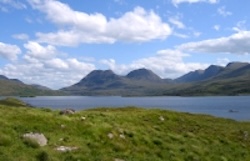 Consider the United Kingdom, here there are a whole variety of parent rocks, some hard like granite, some soft like chalk, some composed mainly of sand, others of clay. The climate also varies across the UK. For example, East Anglia may have only 300 mm of rainfall in a year while the top of Mount Snowdon in Wales may have 3,000 mm in a year. There are also many different types of vegetation across the UK, with areas of deciduous forest, coniferous forest, grassland, heather moorland, amongst others. Also the landscape changes greatly: parts of East Anglia are low and flat whereas much of the Lake District and northern Scotland has mountains over 800 metres.
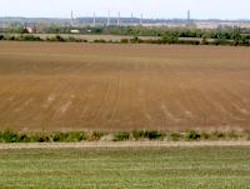 Thus even within a relatively small country like the United Kingdom there is a wide variety of natural soil forming factors leading to a wide variety of soils. In addition there is substantial human influence on the land which itself can also lead to the development of distinctive soils. Considering the variations in the soil forming factors in one country alone and the number of soils this leads to, it will not be a surprise to learn that there are many thousands of different soils worldwide.