
Recognising types of soil
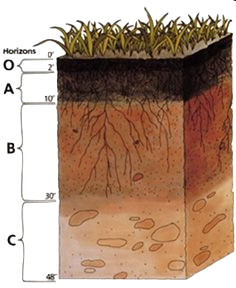
Soil is the thin mantle that covers the surface of the earth. To most people, soil is what you see in a freshly dug garden or a freshly ploughed farmer's field. This uppermost layer of the soil is usually some shade of brown or black. If you have the opportunity to dig deeper, or even better, have a hole dug, or find an exposed depth of soil you will see there is much more to most soils than just this topsoil. The soil below the dark surface layer is usually composed of a series of layers. These layers help to tell the story of how the soil has formed and are used to determine what type of soil it is.
Most soils have formed from rocks and sediments. Some have developed over many thousands of years by the gradual breakdown of rocks that occur beneath them and on which they lie. This is a slow process but if the soils remain reasonably undisturbed significant depths of soil can form. In many parts of the world soil development has been disturbed by various geological events. The Ice Age in particular had the great effect, scouring away existing soils, and leaving behind mixtures of rocks, sediments and soil in which new formation of soils could take place. Throughout the world new sediments are being laid down, as in the deserts and the floodplains, and soils will develop in them to become the soils of years ahead. So the development of soils is quite complex but so important for our existence on this planet. Soil development is constantly on the move and soils are in a state of constant development and change.
Each soil consists of a series of layers, termed soil horizons. It is the type, nature and arrangement of these horizons that provide the clue to how soils have formed. The soil profile is the term used for the whole depth of soil including all the layers (horizons) of soil from the surface of the ground down as far as the rock or sediment some centimetres and even metres below the surface. Soil profiles are the basis for distinguishing one type of soil from another and form the basis for the names given to soils and the way we classify soils. Just as we give plants, such as daisies or bluebells, and animals such as badgers or moles, names, so we need to distinguish different types of soils and also give them names.