
pH and soil
Although much effort has been made to avoid soil jargon and difficult scientific concepts in Soil-Net, pH (or 'potenz hydrogen') is an essential concept in the study of soils so it is important to take a little time to explain. The pH is a measure of how acid or how alkaline the soil is.
Acids and Alkalis may be found all around us, for example in the kitchen, acids (e.g vinegar) and alkalis (e.g baking powder). We must appreciate that just as humans react to too much acidity or too much alkalinity, so do plants.
The pH is a measure of acidity and alkalinity and just as we need to know the pH of many of our foods so plants also are affected by particular levels of acidity or alkalinity.
Some plants grow well in acid conditions and would not be able to tolerate alkaline conditions and vice versa.
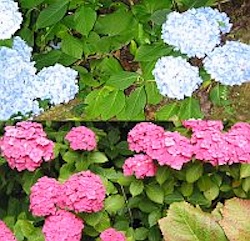
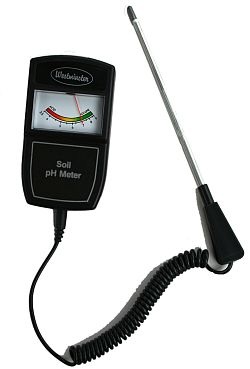 The pH value will indicate what plants and what soil organisms will tolerate the soil conditions in a garden and also what nutrients in the soil will be available to the plants.
There are a range of techniques for pH measurement including those that can give rapid results while in the garden. Many such test kits are readily available in good garden centres. One of the Activity sheets in the download section gives a good example of how to do a pH test on soil.
Alternatively you may be able to ask for some 'litmus' paper from school which can indicate broad pH from a sample of your soil shaken up in a jamjar of water (red is acid, blue is 'base' or alkali). Many plants also have flowers whose colour can reflect the local pH, as the photographs above show.
pH Comparisons
To get a better idea, see how the pH of other common substances compare to the typical ranges for soil noted above (and the range is surprisingly broad!):| Substance | pH | Soil Type |
|---|---|---|
| Battery acid | 1 (Acid - red) | |
| Lemon Juice | 2 | |
| Vinegar (Acetic acid) | 3 | Upland acid soils |
| Tomato juice | 4 | Upland peat soils |
| Black coffee | 5 | Podsols, pineforest and heath soils |
| Urine | 6 | Deciduous forest soils |
| Blood and pure water | 7 (Neutral) | Agricultural soils, fenland peats |
| Seawater | 8 | Calcareous chalk and limestone soils, saline soils |
| Egg white | 9 | |
| Milk of Magnesia | 10 | |
| Ammonia | 11 | |
| Bleach | 12 | |
| Oven cleaner | 13 | |
| Drain cleaner | 14 (Alkaline - blue) |