
Strip Lynchets
If you look on a map you will often see a sign marked on the side of hills in ancient lettering which says 'strip lynchets'. What are they?
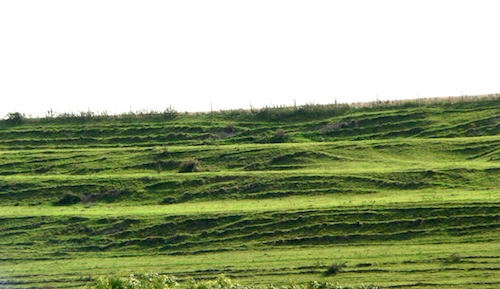 Strip lynchets gave medieval farmers the opportunity to get the maximun benefit from their land. On hillsides the soil was often very thin and after being ploughed, it was liable to be washed away by heavy rain. This meant that crops would yield very poorly. Ploughing gradually developed a system of terraces, rather like huge steps in the hillside. The flat top of each strip would retain the soil, which could be enriched and would produce a much greater yield, as well as being easier to farm.
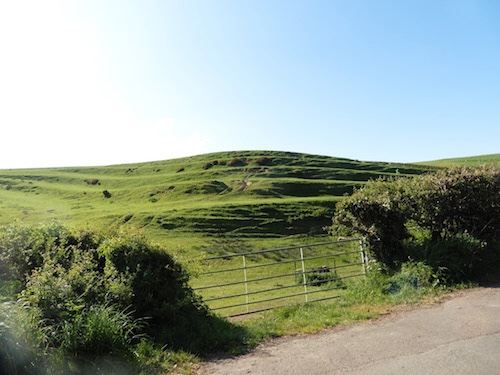 The actual development of these terraces was probably the result of a long period of ploughing, with a bank of earth building up on the downslope of the hill. This would slide down the slope and gradually form the terrace with a flat area immediately above it. Some lynchets may have been created intentionally as a way of improving land use.
Many of these lynchets probably date back to Saxon times or even earlier. Through the early medieval period, as the population grew, there was a greater demand for useable agricultural land. Lynchets provided a way which allowed quite steep hillsides to be cultivated. The often-shallow soil on these hillsides was no longer washed away and it could be deepened and enriched by the grazing of farm animals as well as by growing crops. Following the sudden drop in population numbers caused by the devastating plague known as the Black Death, when something like 1.5 million of a total population of 4 million died between 1348 and 1350, the need for these lynchets was not so urgent, and they gradually fell into disuse.
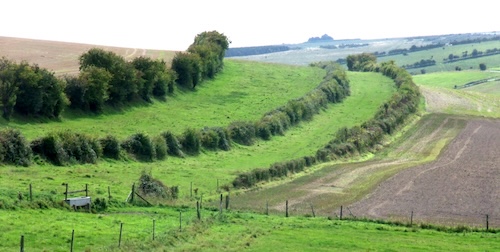 That many lynchets were very high is indicated by how many can still be seen in spite of centuries of weathering. Today they are mostly left as grass pasture for sheep and are no longer farmed for crops. Many are still visible, so keep an eye out for them.