
Waste products in soil
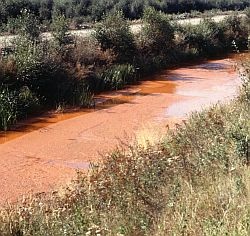
We must not forget that some waste is good for soils. The principle of composting vegetable waste and putting it back into the soil is a tried and tested one, with many beneficial returns such as increasing organic matter in soils. Similarly farmyard manure has been added to soils for many centuries, with great benefits. So there is much to be gained by returning some forms of waste to soil, but this needs to be done selectively and with good knowledge of the waste and its potential impact on the soil. We are moving into a period when there is a drive to use and re-use as much waste as possible and this is to be acclaimed.There are many examples worldwide of waste materials being added to the soil where they have caused major problems. Some examples described below can be found in the publication (Bullock and Gregory: Soils in the Urban Environment. Blackwell Scientific Publications. 1989):
Mining and smelting of metals, Shipham, Somerset, England: A geochemical survey of England and Wales revealed large amounts of cadmium, zinc and lead in the soils of the Shipham area as a result of extensive mining of zinc in the area between 1700 and 1850. Soils reclaimed from and near old mine workings contained between 30 and 800 parts per million (ppm) cadmium, compared with a normal value of less than 2 ppm. Subsequent to the mining, several lots of houses were built on the reclaimed soils. The area has been closely investigated by geochemists and health experts and is kept under supervision.
Chemical waste material, Love canal, Niagara, USA: In the late 1800s attempts were made to build a canal linking the upper and lower sections of the Niagara river. Eventually the scheme was dropped. The 3,000m trench that had been built was bought by a chemical company in the 1940s and was used by them to deposit thousands of tonnes of solid and liquid chemical waste. The site was covered and eventually had houses and schools built upon it. The buried chemicals began to migrate into the soils and buildings causing the local people to go down with various illnesses. Eventually the school was closed and families left the houses. Two hundred and forty eight different chemicals were identified on the site. Residents suffered from a whole range of health problems.
The Chernobyl nuclear disaster, April 1986: The Chernobyl Nuclear Power Reactor 4 in the former Soviet Union exploded in 1986, causing severe radioactive contamination in areas up to 100 km from the site of the explosion. About 22 percent of Belarus received serious radioactive fallout including caesium-137, iodine, plutonium and strontium, and even Western European countries over 1,000 km west of the explosion showed evidence of enhanced amounts of radioactive elements in the soil. These were transferred from the site of the accident in the atmosphere and deposited in the soils of Europe by dry dust deposition and as wet deposits in the rainfall. Once in the soil they were able to enter the food chain via plants that grew in the soils and animals that grazed on the plants. High levels of contamination were detected in agricultural produce in Belarus and Ukraine soon after the explosion. Once in the soil the contaminants can become fixed by minerals and those radioactive components such as caesium-137 with a long half-life can stay in the soil for several years. Radioactive substances are potentially very harmful to health.