
Soil and the carbon cycle
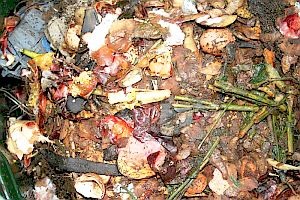
The soil is increasingly being recognised as an important part of the biological carbon cycle and as a significant store of carbon. World soils contain twice as much carbon than there is in the whole of the atmosphere and more than twice that in all the living vegetation in the world. Soils are thus a very important part of the carbon cycle. Soils have obtained their carbon from the decay of plant life over centuries. The vegetation that soils support, whether it is large trees, grasses or crops, all decay or are harvested and their remains are returned to the soil where they contribute to soil organic matter. This organic matter is the significant store of carbon in the soil.The larger soil animals, such as earthworms, slugs, earwigs, woodlice, break up the plant remains once they reach the soil.
The fragments of plant material produced by these animals are then consumed and further changed by fungi and bacteria. There is abundant use and re-use of this carbon-rich material below ground by the enormous numbers of soil organisms but in the process some carbon is returned to the atmosphere. In addition to the bacteria that help to breakdown the organic fragments, there are also some, termed autotrophic bacteria, which can use carbon directly from the atmosphere to synthesise organic compounds, using energy from light or from oxidising inorganic substances. Some of this carbon is returned to the atmosphere during respiration but most will stay underground with the bacteria until they die.
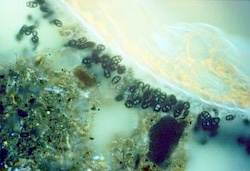 The soil organic matter thus goes through a complex process of breakdown leading to release of nutrients for the next generation of plants and organisms and to the release of carbon dioxide to the atmosphere. At any one time there will be a large reservoir of carbon in the soil, tied up to varying extents and with varying rates of turnover. Some will be part of the active fraction and will be subject to rapid turnover, in a few months or one or two years. However, depending on the type of vegetation, the soil conditions and the prevailing climate there will be some carbon, usually the largest amount, that is very slow to turnover, perhaps taking hundreds of years. There is now much interest in the factors that may govern the rates of breakdown of a soil's carbon because of its potential for moderating the effects of climate change. It is also of interest what methods can be used to convert more of the carbon to the medium and long term reserves.