Soil and plant communities
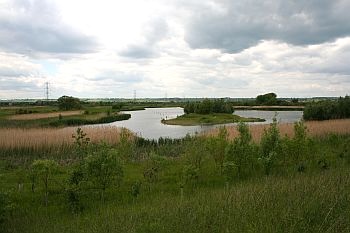
Most countries of the world because of their climate, relief, soils and the influence of man will have a distinctive natural vegetation which is a response to these factors. To illustrate how plant communities are a product of the interaction of these factors and what a large range of communities there are, a few examples are given for the United Kingdom.
Lowland Heaths
There are numerous examples of these in Southern England, generally formed under low rainfall (less than 600mm). The principal soil type is the humus-iron podzol formed mainly in sands and gravels. The soils are moderately strongly acid with a pH below 5.5. The principal species present is heather (Calluna vulgaris) together with dwarf gorse (Ulex minor), bell heather (Erica tetralix), heath bedstraw (Galium saxatile), sheep's sorrel (Rumex acetosella), grasses (such as Deschampsia flexuosa), and in some places bracken (Pteridium aquilinum) and common gorse (Ulex europaeus).Chalk grassland
This vegetation type is to be found in Eastern and Southern England on Chalk rocks. The soils are alkaline and can vary in thickness from a few centimetres to over 50 centimetres. The main soil types are rendzinas and brown calcareous earths. The dominant plants are sheep's fescue and red fescue (Festuca ovina) but these are often accompanied by numerous other species including cowslip (Primula veris), various orchids (Orchidacaea), wild thyme (Thymus drucei) timothy (Phleum pratense), salad burnet (Poterium sanguisorba), bird's foot trefoil (Lotus corniculatus), and many others.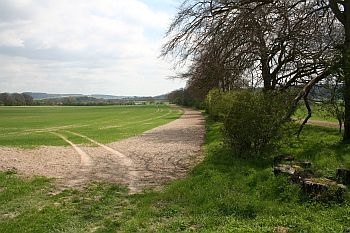
Acidic Grasslands
These occur in the northern and western parts of Britain on acidic rocks of the Scotland, the Lake District, Pennines and Wales. Under the high rainfall of these areas the soils have been strongly leached and hence the soils are low in calcium and acid. The dominant plant is common bent grass (Agrostis tenuis) but various other grasses may be present depending on the prevailing local climate and the degree to which the soil remains wet for much of the year. Other grasses present may be Sheep's fescue (Festuca ovina), purple moor-grass (Molinia caerulea) and mat-grass (Nardus stricta). This type of grassland is used mainly for sheep grazing and this may well limits a wide variation in species as does the soil acidity. Many of the species are calcifuges reflecting the acid conditions.High Moors
These are typical of northern Britain including the Scottish Uplands, Pennines, and the North York Moors. They are upland areas subject to high amounts of rainfall. Because of the high rainfall, the poorly drained soils and the cool climate the breakdown of plant remains is slow and varying thicknesses of peat have developed. This peat then acts as a sponge for incoming rainfall and the soils can be waterlogged for substantial periods of the year. There are several classes of moor depending on the climate-soil conditions. In some parts cotton grass (Eriophorum vaginatum), capable of existing in waterlogged acid soils low in oxygen is the dominant plant. Depending on the local soil conditions bilberry (Vacinnium myrtillus), purple moor grass (Molinia coerulea) and various types of heather (Erica species) can be present.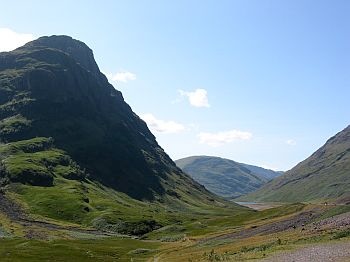
Man-made landscapes
Most landscapes in the United Kingdom are now man-made and man has altered the vegetation pattern of the country very significantly in the last 500 years. Thus there are very few truly natural landscapes left. Those that do provide a very interesting picture of the interaction between the soil as it occurs locally, the climate, relief and vegetation type. There is much to be learned from these natural sites and their soils.