
Land suitability systems
These approaches are aimed at evaluating the use of land for specified kinds of use and are thus set up more for local areas than for whole nations. The FAO Framework for Land Evaluation is one such system which has been applied successfully in many developing countries. Evaluation involves comparing two or more kinds of use, which may not always be agricultural. Land is assessed as to whether it is highly suitable, moderately suitable, marginally suitable, currently not suitable or permanently not suitable, for the purposes set out
In the United Kingdom, particularly as the area of the country covered by soil maps has increased, so it has been possible to develop a range of land suitability classifications for a wide range of uses including specific crops and farming techniques, as well as a range of non-agricultural use classifications. These have included: suitability for specific crops, including new experimental crops, suitability for application of sewage and other waste, evaluation of soils with respect to causing corrosion of buried objects and foundations, suitability of land for construction of playing fields.This approach has benefited greatly from the completion of more and more soil maps. Given a soil map of an area, together with information about local conditions such as climate and relief, it is now possible to evaluate with confidence the suitability of land for almost any purpose. This provides a major platform on which the build the successful future use of our soils, a basis for quality control, and can ensure that the quality of global soils is maintained or improved.
What are your soils suitable for?
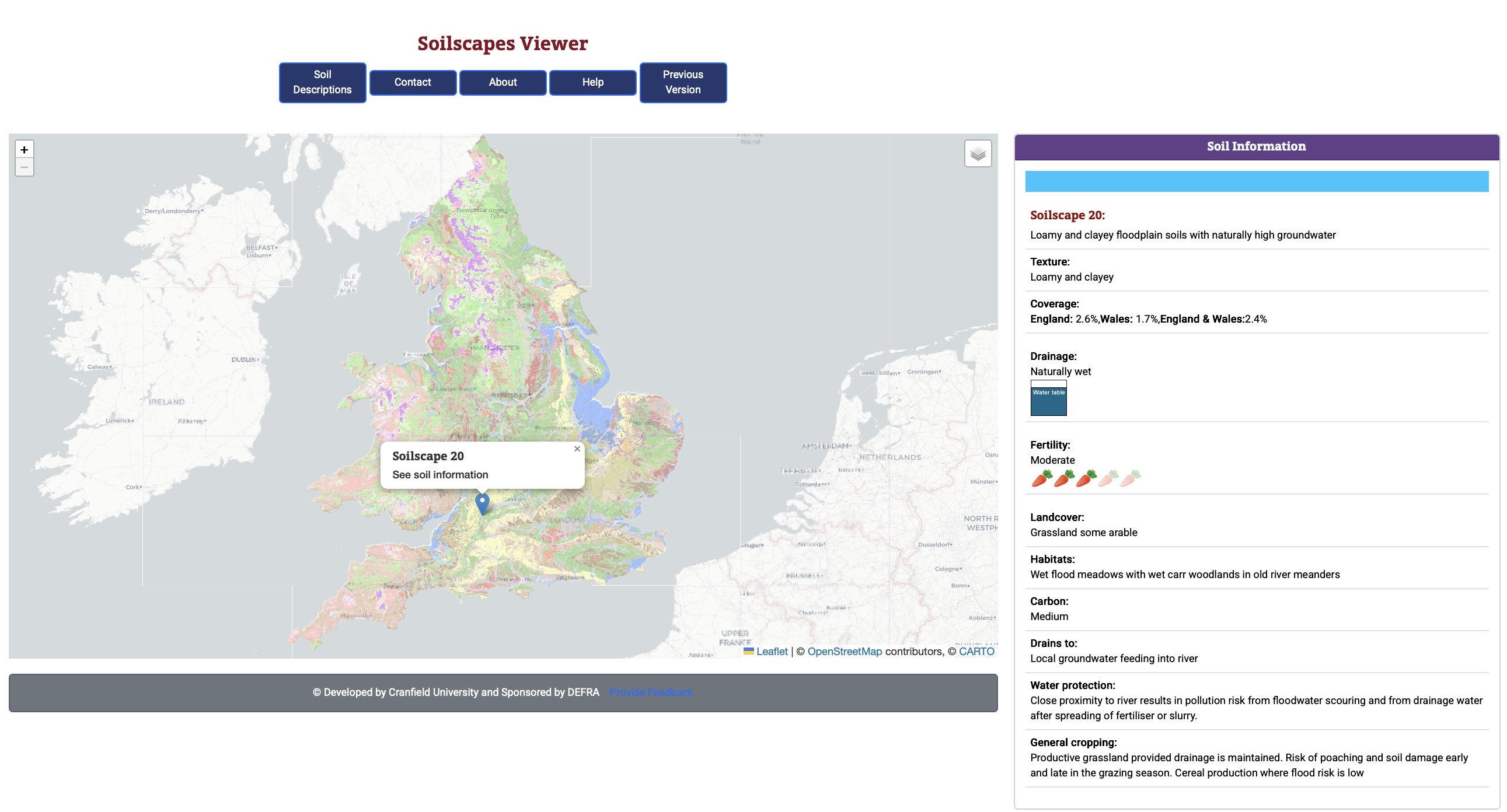
What is the soil suitable for where you live? Why not use the SoilScapes interactive viewer tool to see what the soils are like in your area. Note the soil 'fertility' carrot icons on the screen.
SoilScapes viewer (opens in new window)