
Soils and water worldwide
In an ideal world there should be fertile soils with abundant but not too much water. There are few areas around the world that are blessed with this combination and these are the prime agricultural areas of the world. In most areas of the world there is not this ideal combination. For example, in the arid desert areas of the world there is generally insufficient rain entering the soil. Here, if plants are to succeed, irrigation is practiced with water brought in from outside the region and added to the soil at crucial periods of the year. Unfortunately, these waters can contain many salts and their use over hundreds of years has given rise to salinisation which has damaged land almost beyond repair.
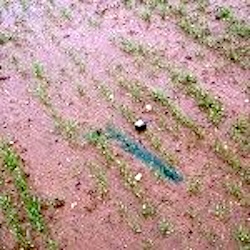
In some parts of the world also, soil erosion has become a major problem. The condition of the soil will regulate to a great extent what happens to the incoming water. If the soil structure is poor and the surface compacted there will be a much greater tendency to run-off and flow over the surface. If there is rapid run off, overland flow can lead to extensive soil erosion and development of rills and gullies. In some areas such run-off is difficult to avoid because of the tendency for heavy storms to fall on poorly structured soils. Much of the soil erosion of the world, which is a matter of increasing concern, is due to heavy rainfall on dry poorly structured soils.
The result is often severe soil erosion as seen in the illustration.The other outcome of rapid soil run-off is flash flooding. With most of the incoming rainfall flowing over the soil surface into the rivers and lakes, the inputs often lead to extensive and damaging flooding.The soil-water interaction is a critical one, particularly for agriculture, natural and semi-natural vegetation, organisms that live in and above the soil, and increasingly for the infrastructure that is needed to support the growing population. We need to understand well the interaction between soil and water so that we can control it and ensure that it is maintained and available for future generations.