
Soil compaction
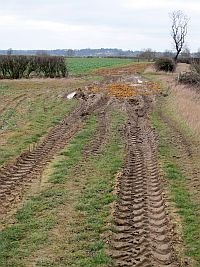
Soil compaction is the reduction of soil volume due to external factors. The risk of soil compaction is greater today than in the past due to an increase in the size and weight of farm equipment. Soil compaction reduces soil productivity. Research in cultivated soils showed average first-year yield losses due to compaction of approximately 15 per cent, mostly due to residual effects of surface compaction. Yield losses were decreased to approximately 3 per cent ten years after the compaction event. The final yield loss was assumed to be a result of subsoil compaction and considered a permanent yield reduction. Besides reducing yields, soil compaction also reduces soil biological health and environmental quality.
Compacted soil is dense and has low porosity. Compaction preferentially compresses large pores, which are very important for water and air movement in the soil. Infiltration is then reduced and erosion is increased. There is little root penetration in the soil except if there are cracks and macropores in the soil that can be followed by plant roots. More energy is expended when cultivating compacted soil. Compacted soil is a harsher environment for soil organisms, especially earthworms, to live in. Compaction affects nutrient uptake.
Compaction is caused by wheel or foot traffic on the soil and by soil tillage. Soil is most compactable at a moisture content approximating field capacity (24 hours after a soaking rain). If the soil is saturated, it is difficult to compact because water fills pores. Rutting and slipping during trafficking of saturated soil, however, can also destroy soil structure.
Plough pans are caused just below the tillage layer, if that layer of the soil has a moisture content conducive to compaction at the time of tillage. The traditional mouldboard plough is renowned for causing plough pans, but the disk plough or harrow and chisel plough have also been found to cause pans.
A farmer or gardener can make the soil more resistant to compaction by increasing its organic matter content and by building a soil ecosystem that has a permanent macropore system. There is now much interest in reduced cultivations and in using cover crops with root systems that serve to reduce or correct the effects of soil compaction.