Soils of the Tropical Rainforests
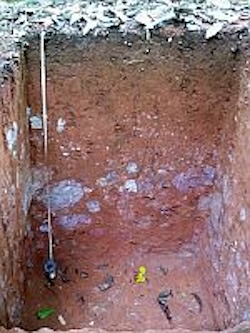
Soils here tend to be deep because the warm temperatures and often high rainfall lead to strong
weathering of the parent rock to form soil. They tend to be reddish in colour because of the way that the iron minerals in them respond to the hot climate. The trees of the rainforest often have roots that penetrate deeply into the soil, helping to break up the parent rock in their search for nutrients. Much of the vegetation of the rainforest relies on the narrow layer of organic matter at the top of the soil profile for its nutrients and its continuing ability to provide nutrients. In the Tropics there is a very fragile balance between the trees' need for nutrients and the ability of the soil to supply them though this thin organic-rich layer.
Desert Soils
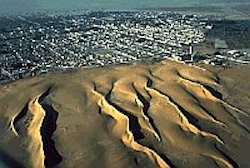
In contrast to tropical rain forest soils, desert soils are able to support little vegetation, mainly because of the extremely low rainfall and very high temperatures. Most plants require water from the soil but here in the desert the rainfall is both low and irregular and cannot be relied upon to keep the water in the soil replenished so that there is no regular supply for plants. Desert soils are low in
organic matter because of the scarcity of plant remains and the rapid rate at which any organic matter is broken down by the intense heat. Many desert soils will thus lack the darker surface horizon, typical of higher levels of organic matter. In many other respects they are potentially good soils, with plenty of nutrients but the lack of water in particular and the low number of organisms render them unable to support a vegetation.
Tundra soils
These are characteristic of areas of higher northern and southern latitudes where the cold temperatures and frozen conditions for most of the year slow the process of soil formation. Tundra soils are thus generally shallow, poorly developed soils which include layers that are frozen for long periods of time. Because they are covered by snow and ice for much of the year, plant growth is confined to just a few weeks a year. The soils may support scattered
shrubs, grasses and lichens during the brief summer. The remains from this vegetation are slow to breakdown so in these soils there will be a significant amount of organic matter, much of it largely undecomposed. These soils thus contrast greatly with the desert soils. In some senses they are a product of the opposite ends of the climatic spectrum. Both are unproductive mainly for climatic reasons.