
Microfauna and Microflora
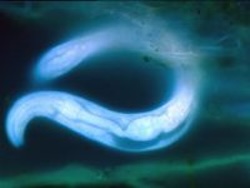
Microfauna are the smallest of the soil fauna and are less than 0.1 mm in size, and so need a microscope to be seen. The two most important soil creatures are the nematodes and the protozoa. Nematodes occur widely in soils, particularly in sandy soils. They depend on a thin film of water around particles for their movement. Some species are parasites and can be a problem for agricultural crops such as potatoes. Protozoa are small and variable in shape. They are major consumers of bacteria. They are well suited to life in soil because they slide over surfaces relatively easily, feeding on soil particles, roots and thin water films in the soil.
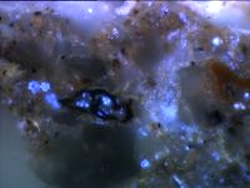 There are three main forms of microflora in soils: bacteria, fungi and viruses. Bacteria are tiny organisms composed of single cells and without a distinct nucleus. They are extremely numerous in soils with billions in just one gram of soil and many thousands of species also within a single gram. Bacteria take part in some of the most important transformations in soils including weathering of rocks and minerals, breakdown of organic matter, and many aspects of nutrient cycling. Fungi are also very common in soils, taking the form of spores, globules and filaments. They depend on living and dead matter in the soil for their carbon and energy.
 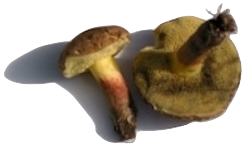 They are important in the decomposition of organic matter and also play an important part in stabilising soil aggregates. Very importantly, mycorrhizal fungi play a major part in securing nutrients for plant production and many plants are dependent on such relationships.
Viruses are the smallest and simplest multiplying entities in the soil but, perhaps because of their small size, rather little is known about them. All are parasites, i.e. they live off other flora and fauna. A range of plant, insect and human viruses can be found in soils. The conditions in soils that most influence the numbers of viruses are moisture, the surface of soil aggregates and structural units and the rooting system of the plants. We know relatively little about the viruses in soil and also about many of the other tiny organisms. The fact that many are extremely small and are out of sight below ground means that the full importance of many of these creatures may yet remain undiscovered for some time.