
Plant water supply
Soil water comes mainly from rain and snow. Once water enters the soil some flows straight through the soil to the rocks below but most stays in the soil for a while. Water in the soil is held in the gaps or pores, and around the mineral grains. Water is the precious supply for all plants growing in the soil.
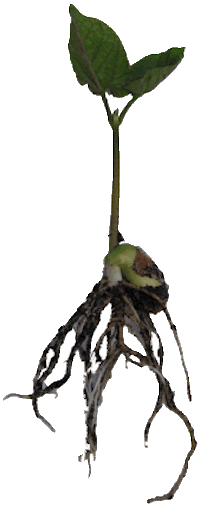 Plant roots have to find water to keep the growing plant supplied. Water is stored in the soil in the pores, around the mineral grains and together with organic matter. Water only passes to the roots when rainwater enters the soil filling the pores (like a sponge filling up). Roots mainly take in water near the young growing tips of the root (called absorption). Here, there are lots of root hairs and these allow the plant to reach into the smallest gaps in the soil to look for water.
When soil dries (as in Summer), plant roots must grow through the soil to find water. The only way that roots can reach more water is by growing longer - they cannot move like we can! Therefore, most plants have a big network of roots and root hairs covering a large area of the soil. In some cases the network of roots and root hairs in the soil covers a larger area than the plant itself does above ground. It is an amazing fact that with some plants, if you could lay the roothairs end-to-end, they would measure thousands of kilometres!
Not everywhere in the world has plentiful rainfall and in dry or arid areas, for example, only a certain types of trees and other vegetation can tolerate the droughty conditions. Soils in these areas tend to hold too little water for most plants and only a few specialist plants with low water requirements and/or very deep rooting systems are able to survive - for example think of cacti. In some parts of the world, particularly arid regions like parts of the Middle East and Australia, there is insufficient water in the soil to grow crops. In these regions, water has to be pumped onto the fields to grow crops. This is called irrigation and farmers have to irrigate their soils to allow crop production.