
Other worldwide soils
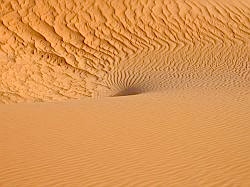
Some world soils are strongly influenced by parent material. These include organic soils formed in fen and peat deposits. Most of the soil profile of these soils is composed of organic matter. Some of these soils are among the most fertile in the world. Other soils in which parent material has a strong influence include those on sandy deposits (Arenosols), on volcanic ash deposits (Andosols) and on clay deposits with high shrink-swell capacity (Vertisols).
In some other world soils, the dominant soil forming influence is topography. In many of the mountainous regions of the world, the steep slopes are regularly being eroded and it is difficult for deep soils to form. Commonly, the soils here will just have a thin topsoil directly overlying the parent rock as there has been no period of stability for a B horizon to form. There can be other weakly developed soils which are much deeper. These are generally found in recent alluvial deposits such as in river floodplains subject to regular immersion and new deposits added to them.
Finally there are soils which have been greatly affected by human activities, including additions of organic materials or household wastes, irrigation or cultivation. These have altered A and B horizons and are now known as anthrosols. Anthrosols often exhibit distinctive physical and chemical properties, such as increased organic matter content, altered soil structure, elevated nutrient levels, or the presence of artefacts and transported materials. Their characteristics reflect both the nature and intensity of past land use, providing evidence of long-term human modification of the soil profile.