
Acid rain and soils
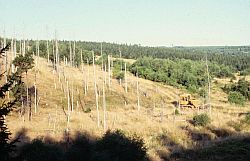
Acid deposition can reach the soil by a number of mechanisms. It can fall as precipitation on the vegetation and pass down the stems and trunks to the soil; it can fall directly on the soil; and it may also reach the soil as dry deposition such as dust. Within the soil, acid deposition can cause a number of problems. Firstly it increases the acidity of the soil. Generally, in nature, most soils unaffected by major pollution have a pH between 5.5 and 7.0 and this range seems to be ideal for a wide range of plants, agricultural practices and for many soil organisms. When the pH falls below 5.0, as it does under the influence of acid deposition, the soils become acid and only a limited range of vegetation can tolerate such conditions. Increasing acidity sets up a further chain of events because under acid conditions weathering of rocks and minerals is more aggressive. Many of the nutrients attached to the surfaces of the mineral particles, where they are a food supply for plants, are released and can be washed out of the system. The nutrients move into the rocks below out of the reach of plants and eventually can move from there into the water bodies. In place of the nutrients that have been lost, certain elements such as aluminium, copper and lead which can be toxic to plants, become more available. The increasing soil toxicity under extremely acid conditions also has the potential to disturb and damage the highly important microbial populations, which are a key part of nutrient cycling.
In some ecosystems that require low amounts of nitrogen the influx of nitrogen in acid rain can upset the balance of plant life. For example, if the supply of nitrogen increases then those plants that can use it effectively may well replace and out-compete plants requiring less nitrogen. The influx of this extra nitrogen can thus disturb ecosystems. It can also cause an imbalance in the microbial activity and lead to changes in the structure of the microbial population which can itself upset the nitrogen cycle. Whereas a soil 200 years ago may have had lots of potential nutrients in the soil on the edges of the particles available for use by plants, now these have been replaced in some soils by aluminium and hydrogen, both of which can be deleterious to plant life. This has been linked to damage to forest growth. These changes to the nutrient balance caused by acid rain can have far-reaching effects.
Coarse textured acid soils with a low buffering capacity, such as podzols are particularly vulnerable to increasing acidity and the effects of acid rain. Such soils support many of the coniferous forests of the world. The soils, already somewhat depleted of nutrients, become further depleted and struggle to maintain nutrient levels for the current forest. If acid deposition continues, world soils will become increasingly acid and vulnerable to loss of nutrients and the other degradation effects associated with it. The long term experimental plots of Rothamsted Experimental Station in the UK indicate that the pH of the local soils has been declining over the last 130 years. On an experiment, where arable land has been allowed to revert to woodland since 1886, the pH of the surface soil has gone down from 7.0 to 4.2 over this period. It is likely that acid rain has contributed to this marked decline.
It is fortunate that many soils have a built in mechanism to prevent or slow down acidification, called buffering capacity. The soil's ability to buffer against incoming acid influences depends on the properties of the soil. Sandy soils low in organic matter have a low buffering capacity whereas those that are clayey and contain ample organic matter will generally have a high buffering capacity. Soils that are calcareous, as in the case of chalky soils also have a good buffering capacity. Thus, initially, depending on the soil type, some soils will have the ability to withstand acid deposition effects at least for a time.