
Improving garden soils
Your garden soil will never be perfect! But just as the farmer can improve the soils of their fields, garden soils can also be improved in a number of ways and your choice of method will depend to some extent on the soil type of the garden.
Improve the structure of the soil
The texture of the soil is the way to describe the size and type of the soil particles which make up the soil of you garden. The structure of the soil refers to what has happened to it in the circumstances of your particular garden. The roots of trees and shrubs will have affected the structure. So too will holes dug by any animals, and even by earthworms, as they work hard improving the soil for you. It is affected by wetting and drying and by whether your soil retains moisture or loses it quickly in dry weather.The structure of the soil can be much improved and made more stable by the addition of organic matter such as compost or well-rotted manure which helps heavy soil such as clay to break down. It is important because the structure of the soil can greatly affect its ability to grow plants, to allow water to drain and nutrients to penetrate.Improve the organic content of the soil
Boosting topsoil with plenty of good quality organic matter should be a priority. A good source of organic matter is garden compost. This can consist of a whole range of vegetable matter including grass cuttings, dead leaves, dead flowers, remains from the kitchen preparation of vegetables, paper, straw and other organic materials.Farmyard manure, where accessible, can be used as a substitute for compost and can be used to create good quality, nutritious topsoils. Make sure it is well rotted before use in the garden! Many would argue horse manure is the best.
Once the organic remains are well composted, the compost should be spread onto the surface of the garden and preferably mixed with the underlying 30 centimetres of topsoil. As soon as the opportunity arises it should be dug into the top 30 centimetres of the soil. This helps to provide nutrients for the plants, improves soil structure and drainage and generally improves the workability of the soil. It is a 'must do' for any serious gardener.
Improve the nutrient content
Because gardening generally involves the removal of crops, whether they be flowers or vegetables, it leads to the gradual decline in the amount of soil nutrients. For this reason it is important to maintain the level or even improve the level of nutrients in the soil.This is now normally achieved by the use of appropriate fertilisers. Plants need some thirteen main nutrients, as well as others in very small amounts and thus maintaining a sufficient supply of all these can be a tricky business. However, in most gardens three are particularly important: nitrogen, phosphorus and potassium.Nitrogen is important for growth of leaves and stems, phosphorus for root growth and potassium for flower and fruit production; adequate levels of these need to maintained. This can be done by using selected mineral fertilisers which contain these nutrients. Farmyard manure can also be used as a source of nutrients but it is less specific that the recommended doses of mineral fertilisers.
Improve the pH
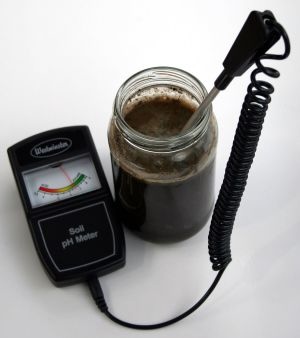 It is important that the gardener matches the plants' requirements to the pH (the natural acidity) of the soil. Failure to do this will lead to poor yields of vegetables and poor quality flowering plants. It is possible for the gardener to change the pH of their soil.
Adding lime will increase the pH of acid soils (making them more alkaline); the creation of more acidic conditions, i.e. to decrease the pH, is more difficult but can be achieved with the application soil sulphur, iron or aluminium sulphates, acidic organic remains or acidic fertilisers.
All gardeners should know the pH of the garden soils with which they are dealing and the pH requirements of the plants which are to be grown. There are well established ranges of pH that can be tolerated by both flowers and vegetables.