
Preparing soil to grow crops
Fertilizers and manures: Like human beings, all crops need nutrients and it is the soil that supplies most of these nutrients Yields of crops are usually related to the nutrient content of the soil and one of the first things the farmer has to do is to make sure there are plenty of nutrients in the soil. All soils will contain nutrients but often not in the quantity needed to sustain high yields. The farmer has, therefore, to add sufficient fertilizers and manures to ensure that the soil contains sufficient nutrients for the crop that is to be grown. This applies both to arable and pasture land. Farmyard manure has been added to the soil over many centuries to replenish the nutrients taken from the soil by the crop. In recent years there has been more dependence on manufactured fertilizers as a more reliable method of maintaining high nutrient levels. Nitrogen, calcium, potassium and phosphorus are some of the main nutrients that need to be added as fertilizer.
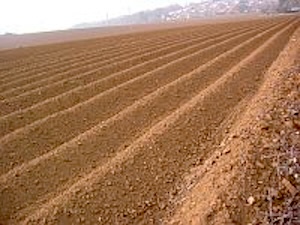
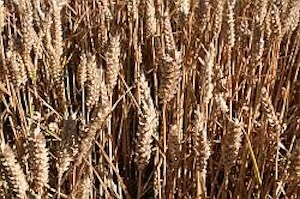 Preparing the seedbed and sowing the seeds: The preparation of a good seedbed is important in giving a crop the best start to achieve maximum productivity. In temperate Europe, for example, soon after the last crop has been harvested, the soil will be ploughed. This turns over the top 20 cm or so of soil, mixing the soil below the surface so that fresh clods and aggregates are at the surface. The land is then left over winter. This is to make use of the weather conditions over winter, such as frost, to break down the larger clods of soil to form fine aggregates which can act as a seedbed. The soil may also be harrowed to help further to create a fine seed bed. Once a seedbed has been prepared the seeds of the intended crop can be planted. Different crops will require different methods of planting. For example, cereals, such as wheat, need a shallow seedbed, whereas potatoes are buried much deeper. Machinery to help with the planting and aftercare means that larger areas can be planted.
Harvesting the crop: Again there is a big difference in methods used to harvest crops in different parts of the world. In less developed parts of the world most harvesting is done by hand whereas in developed parts of the world it is virtually all done by machine. Since the 1940s in Western Europe, adoption of modern methods of farming has led to doubling, and sometimes trebling of yield, and this has enabled food production in developed parts of the world to keep pace with large increases in population. Unfortunately this cannot be said of the developing world where hunger and famine may often be all too common.