
Cultivating Soils Worldwide
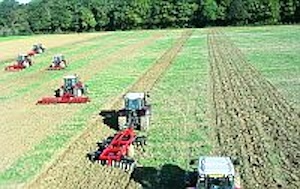
The drive to produce more food in the developed countries has put much pressure on the soil and the environment. In order to sustain high yields large amounts of fertilizers, particularly nitrogen, have been applied to the soils. In some countries the amount applied has increased 15-fold, resulting in a trebling of the yield of some crops such as wheat and barley. In addition there has been improved plant breeding, more extensive use of pesticides and increased mechanisation. Although fulfilling the need for higher production there have been a number soil-related problems arising from this expansion. These include increased soil compaction, soil erosion, fertiliser nitrate passing through the soils into the watercourses, and increased use of pesticides, some of which have had health consequences. Many of these potential problems are now recognised and are being monitored.
 By contrast to developed agriculture, if we take the continent of Africa as an example, managing soils for agriculture is more difficult. Climatically, extremes of rainfall and much higher temperatures makes agricultural production much more unpredictable than it is in developed parts of the world. Thus in some years of extreme drought there will be insufficient water in the soil to support crops. The soils contain much less organic matter than temperate soils and over the years their ability to supply nutrients is diminished. With uneven, but occasionally heavy rainfall the impoverished soils are easily eroded. Above all, is the fact that farmers are generally poor and unable to maintain the fertility of the soil, thus entering a downward spiral low crop production and decline in soil fertility.There is an ongoing challenge for the world. That is to feed the rapidly growing world population, currently about 6 billion but due to rise to 11 billion by 2020, while at the same time ensuring that world soils are well maintained and their fertility sustained. It is particularly important that we recognise the most vulnerable soils and ensure that they are properly managed and conserved.