
Problem soils
Problem soils can affect the stability of the built infrastructure both across a wide area, and very locally. Every so often, but fortunately fairly rarely, there will be news of a major landslip, mudflow or dam burst, often leading to loss of life. Adverse weather or geological conditions can lead to sudden changes in soil conditions. This is often triggered by periods of extremely heavy rain in which the soils became totally saturated leading to a decrease in the strength of the soil, making it unstable. Earthquakes can also cause a major shaking of the soil which reduces the strength and stiffness of a soil, termed liquefaction. Associated with this is an increase in water pressure which in turn causes soil particles to move relative to each other, leading to a weakening of the strength of the whole system. This can trigger mudflows and landslides, with much devastation to homes and infrastructure.
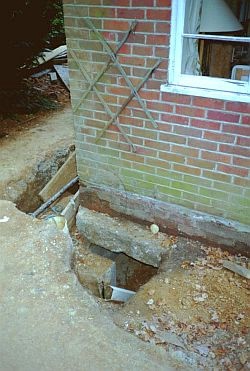 When building it is important to understand fully the nature of the soils on which the buildings are to be placed. This is very important in the case of clay soils, which can shrink and crack when they dry out and swell when they re-wet. Clay soils which contain plate-like minerals (termed smectites) that cause them to have shrink-swell characteristics occur in many parts of the world. The uneven shrinkage and swelling of these soils causes problems to the foundations of buildings and special care needs to be given to building on these soils. As climate change increasingly affects all our lives, so the soils in some areas are becoming subject to more extremes of drying out and rewetting. Disruption to the foundations of houses on some clay soils in Britain, for example, is now occurring because of this more extreme drying out, and subsidence cracks are now evident. This has led to a large increase in claims on insurance companies.
Some soils, particularly near the coast, contain significant amounts of 'sulphide' minerals. Provided these soils are kept in a wet condition there is little problem. However, in recent years there has been a tendency to drain these soils. This drying lets oxygen enter the soil. This has had the bad effect of acidifying the soils greatly, even to pHs below 3.0 (extremely acid for a soil!) Under these extreme acidic conditions the soils can become very corrosive to infrastructure and underground services. With the increasing interest in conversion of land to agriculture and the building of houses in the coastal zones, there are now increasing examples of these highly acidic types of soil. Such soils would be likely to cause severe problems for many infrastructure foundations.