
Soil supporting buildings
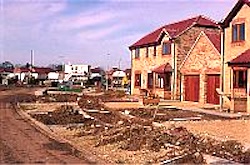
Soils act as a foundation to many of our buildings, roads and railways and other parts of the infrastructure. Our towns and cities are built on or in soils. Several properties of soils are important in relation to building. These include the stability of the soil. Soils change according to whether they are wet or dry. For example clay soils will shrink when very dry and swell when wet. This puts different pressures on the foundations of buildings in these soils. It is the work of the civil engineer to understand the behaviour of soils so as to ensure that the foundations of the buildings take account of soil properties and do not collapse as the soil changes from season to season.
 Let us not forget the importance of soil in our leisure and sports activities. Think about football and rugby pitches, golf courses, parkland etc. These all depend on the soil being properly looked after!The problem with building on soils is that it usually prevents the soil being used for any other purpose in the future. It seals the soil. For example, when a soil is built upon, it is unlikely to be ever used for agriculture and food production again. As we build more and more on our soils to provide homes for people we must realise that at the same time this reduces the amount of soils that can be used for food production and other purposes. The spread of towns and cities each year swallows up 5,000 hectares of land each year, equivalent to the size of a county town. We must balance the needs of land for various purposes very carefully.
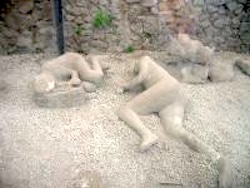 Over the centuries the soil has also acted to preserve sites of archaeological value and the objects used by peoples over different periods of history. The fact that there are many fine archaeological remains throughout the world is partly due to the fact that they have been safely preserved in the soil. The soil can be a safe haven for objects that find their way into it and has been responsible in part for the wealth of material that has been preserved from past centuries.