
Physical weathering
Physical weathering is a particularly important process in the early stages of soil formation. This is the process whereby solid rock first starts to break down into a soft and easily workable soil. As erosion removes layers of rock, and the underlying rocks come closer and closer to the surface, through erosion occurring in the landscape or through more catastrophic events such as volcanic activity and mountain building, so the rock becomes destabilised. These changes occur as the rock is no longer in equilibrium with the conditions deep below the surface of the earth but is now coming under the influence of the atmosphere, rainwater, snow and different temperature regimes. The solid rocks are attacked, broken down and eroded by these different processes.
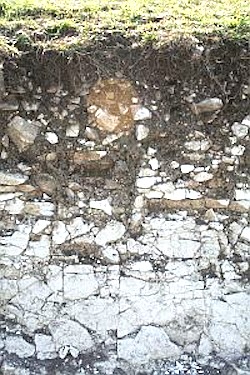 One of the most influential of these physical processes is freeze-thaw by which water enters cracks and joints in the rocks, and then freezes. In freezing, the water expands, causing the rock to shatter into smaller pieces. This process is repeated time and time again until the smaller and smaller rock fragments reach the size of sand, silt and clay particles. The last Ice Age lasted some 2 million years, during which there were several long periods of freezing and thawing conditions. There were centuries of freezing followed by centuries of thawing during which rocks were scoured and broken down into finer grained sediments, called glacial deposits or till. These deposits had a major influence on, and became, the soil parent materials in many countries. Many soils have formed in these often deep glacial deposits and these are some of the most fertile and productive soils in the world. Physical weathering is continuing all the time, helping to produce new soils and making existing ones deeper.
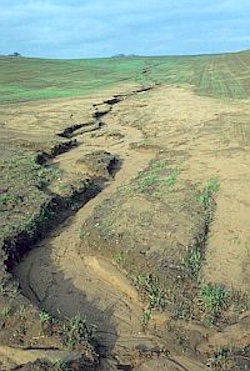 There are several other physical processes in addition to freeze-thaw which contribute to soil formation. These include wetting and drying in which the surface soil material and underlying parent materials undergo periods of wetting, for instance after heavy rainstorms, followed by periods of drying. Some soil materials, particularly the more clayey ones, expand when wet, swelling up but when soils dry out they shrink. These alternating wetting and drying periods can break down rocks, minerals and sediments into smaller particles and also cause disruption to the ground. The forces involved can be large as demonstrated by the damage done to buildings and infrastructure built on soils that have high shrink-swell potential. Alternate heating and cooling is also an important way in which rocks break down to form soils. In hot climates, temperatures may rise greatly during the day but fall greatly at night. This can lead to differential expansion and contraction in rocks and minerals causing weaknesses to develop and eventual breakdown of the rocks into smaller fragments. Soil erosion by wind or water is also a widespread mechanism by which particles are moved across the landscape. In the process of this many particles become abraded and reduced in size. When re-deposited these particles will contribute to new soil development. Soil erosion is a threat to soil development in many areas but the re-deposited sediment can also become the parent material for the next generation of soils.