
Other soils in Britain
There are ten major groups of soils in Britain of which four of the most extensive have been described in the previous section. The remaining six cover about forty percent of the country. One of the most interesting of these is the group of organic soils, in which most of the profile depth is composed of organic matter. These are soils which are dominantly formed of organic matter. Some of these soils occupy areas of lowland Britain where they form some of the most fertile soils in the country. One of the main areas of these highly fertile soils is the Fenlands of East Anglia where there are several metres thickness of peat. Organic soils of this major group can also occur in the upland areas where high rainfall and acid conditions mean that over centuries the organic matter has been slow to break down and now exceeds 50 cm in thickness. Unlike the fenland soils these upland soils are very acid and largely unproductive.
Another fairly widespread major group of soils is the pelosol. These are soils formed on the clay deposits of Britain but with rather better drainage than that found in the gley soils. They have brownish or reddish B horizons (depending on the clay strata from which they are formed). Britain also has numerous examples of thin, little-developed soils, formed on the steep slopes of the uplands or in other unstable situations such as sand dunes. These soils are termed lithomorphic soils. These soils lack a B horizon; instead they have an A horizon immediately overlying the C horizon. Such soils formed on calcareous rocks such as chalk are termed rendzinas and those on acid rocks, rankers.
In a small country with a relatively large population like Britain it is not surprising that humans have altered some of the soils. There is therefore a group of man-made soils. These are soils which have been extensively changed by humans, to a greater extent than by everyday farming. These soils are of very mixed origin. Some have been greatly influenced by building as in the towns and cities. Others are related to reclamation after mining, as in the areas of coal mining. They have very mixed profiles and the profiles do not result from the natural soil forming processes like those in the other major soils above.
The soil types in Britain
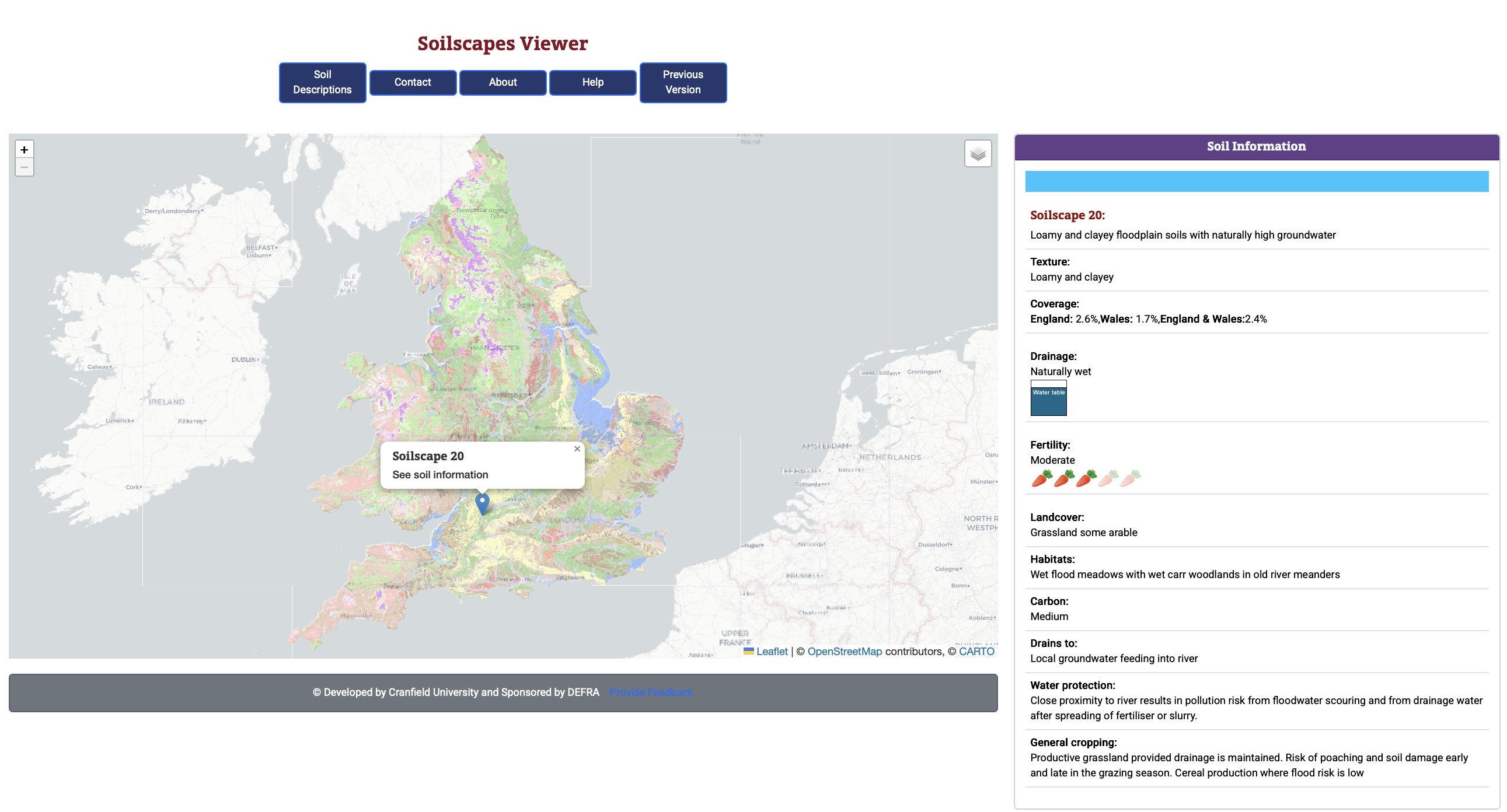
How do the soil types vary across Britain? Why not use our SoilScapes interactive viewer tool to see what the soils are like in your area.
SoilScapes viewer (opens in new window)