
Reducing soil compaction
In cases of natural compaction it is usually difficult and expensive to improve the compacted layers. Much of the compacted area is usually well below the surface, requiring expensive machinery to break it up sufficiently to allow water and roots to move through.
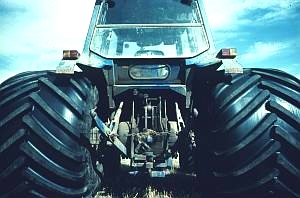
In the case of agriculture, the compacted layer is usually nearer the surface. The best way of reducing the risk of compaction is the carry out the necessary working of the land when the soil is dry. There are now some useful methods for reducing compaction in agriculture including: (i) avoid going on vulnerable land, i.e. silty and clayey soils, when it is wet; (ii) adopt minimum cultivation methods as much as possible. Examples of these include minimum tillage involving the minimum cultivation of the soil necessary to produce a particular crop, and zero-tillage which is the planting of the seed directly into the soil without any prior preparation of the soil; (iii) use techniques such as low ground pressure vehicles which are designed to reduce the pressure on the soil; (iv) keep field traffic to set routes along the fields (tramlines); (v) use soil conditioners to improve soil structure; (vi) regularly examine the soil structure and where compaction is a problem carry out subsoiling (the breaking up of the upper part of the subsoil) and also (vii) increase the amounts of organic matter thus improving the soil structure.
In forestry situations, the key is to be aware how compaction can cause problems in an area and take steps to minimise compaction damage to the land, thereby avoiding setting in train other land degradation problems, such as erosion. In many tropical and sub-tropical areas such steps are often absent and their needs to be a tightening of procedures aimed at protecting the soils.