
Causes of desertification
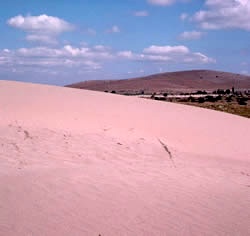
There is not uniform agreement on the causes of desertification. Some lay the blame on human activity and some on changes in climate. In reality, it is likely to be a mixture of the two. Climate is one of the major factors responsible for the world's deserts. Such deserts occur in some of the driest areas of the world where the conditions are difficult for plants, animals and humans to eke out an existence. These semi-arid and arid lands have been subject to regional short term trends or fluctuations in rainfall for centuries. Currently, probably associated with climate change, there is a clear decline in rainfall in some already dry regions, including Chile and the African Sahel. Whereas most terrestrial ecosystems have some in-built ability to withstand and absorb the effects of climatic variability, this is not so true in arid and semi-arid lands, where even small variations in climate can lead to permanent degradation of the productive potential of such lands.
Human induced desertification is influenced by a number of land use issues. Over-grazing of animals is an important cause. It has led to vegetation removal and therefore diminished the protection to the soil. In the culture that exists whereby wealth relates to the number of animals in a community there is always the tendency to increase wherever possible the stocking rates on these vulnerable soils. The result is gradual loss of vegetation and exposure of the soil to climatic forces, particularly windstorms. Deforestation is also an important cause of desertification in some areas. Trees and shrubs within arid and semi-arid areas are important for animal feed and firewood and as the population increases so does the removal of the vegetation so vital in holding the soil together. Over the years in this fragile environment valuable trees have been lost and are unlikely to be replaced.
Over-cultivation has also contributed to pressures on the soils and this has also had an effect on water supplies and quality. Methods of land use have also changed. Transhumance, involving the migration of livestock across the landscape following the seasonal rains, is now more difficult with boundary regulations being imposed. A more sedentary agriculture is now being adopted which has led to over-cultivation and weakening of the already fragile soils. Dryland ecosystems are extremely vulnerable to over exploitation and land uses quite unsuited to the soils and prevailing conditions lead to soil degradation.