
Limiting desertification
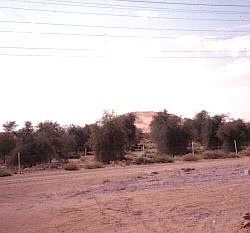
There have been several attempts at reversing desertification and ensuring long term productivity of the inhabited parts of the arid regions. Unfortunately most of these have largely failed and the problem continues to worsen. The costs involved are becoming, if not already, prohibitive and increasingly unable to be met by many of the poorer countries that see higher priorities in other sectors. It is a problem that is gradually spirally out of control. Time will tell whether the United Nations Convention to Combat Desertification will be able to affect the problem to a meaningful extent.
At a local level there is plenty of scope for land reclamation. This includes prevention of overstocking and allowing gradual regeneration of a vegetative cover, tree planting and more extensive afforestation to prevent long sweeps of wind erosion and to provide some cover for the soil, improving water-use efficiency and seeking opportunities for irrigation in a well controlled situation. Irrigation may be difficult in many parts because of distances from sources of water and the dangers of salinisation in uncontrolled situations. Wind breaks can be established and in some situations a checkerboard arrangement of straw or clay can be used to increase surface roughness and reduce wind velocity. These are small local improvements that can be made which require relatively little finance, though even these may be too expensive for the individual farmers who have little capital and have little more than a hand-to-mouth existence. There are partial, local solutions that can be used to improve desertified land but the remedies proposed are local ones for a problem that is on a massive scale. Combating desertification is a huge problem.
To make matters worse the climate appears to be changing and many of the already arid areas are forecast to become even drier. Therefore, the climatic backdrop to this problem is likely to get even more severe. The population of the drylands is increasing just as it is elsewhere in the world. Increasingly the poorer people are displaced onto the most fragile lands. There needs to be huge changes in the agricultural base of the most affected countries if desertification is to be brought under better control. One of the major problems is that the areas include some of the world's poorest populations Education is low, capital to support regeneration projects is virtually non-existent, and the farming systems are largely without financial support. It calls very loudly for a concerted international effort.