
Erosion scale and effects
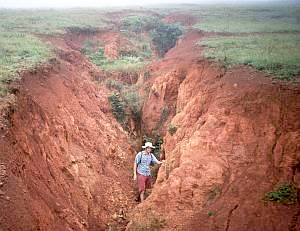
In terms of extent, soil erosion is by far the biggest threat to world soils. Yet, despite the efforts of the United Nations and some countries that recognise its undesirable impacts, the actual extent of soil erosion worldwide is not fully known. It is estimated that it affects some 200,000 sq km worldwide and is known to be accelerating in many countries of the world. Countries such as India and China are reported to be losing soil at a rate some 30 times faster than the rate of new soil formation. It is estimated that about 10 per cent of the area of Europe is affected by severe water erosion and 4 per cent by wind erosion. There are estimated to be some 95 million hectares in North America affected by soil erosion and 500 million hectares in Africa. This has been largely brought about by human activities.
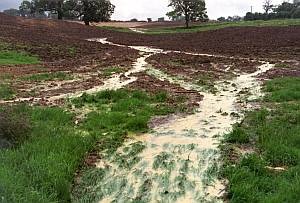 The main causes of most of the erosion in the last century have been twofold. Firstly there has been a marked intensification of agriculture across the world which has led to huge pressure being put on the soil to produce crops. There has been a decline in organic matter levels under intensive farming which in turn has weakened the structure of the soil. Incoming rainfall is then able to initiate splash erosion, in which aggregates break up into single particles. Because of the collapsed structure the water does not penetrate effectively but flows over the soil surface picking up soil particles as it goes. Eventually rills (which are narrow, shallow channels) form along which the water flowing off the fields become channelled. As this process is repeated with each incoming rainstorm so the rills are widened, eventually forming gullies. In tropical and subtropical areas where the rainfall can be torrential, rills quickly form gullies and the gullies widen, taking away the possibility of the fields being farmed again. The soils of these areas are fragile and farming can render these soil very prone to erosion. The second main cause of soil erosion is deforestation. Removal of the forest cover exposes the soil to incoming torrential rain. Damage, particularly compaction of the soil, occurs during the logging operations and removal of the trees from the sites and because most of the soils are weakly structured incoming torrential rainfall scours the soils and removes the particles to other locations.
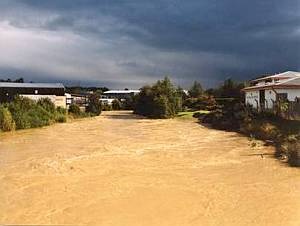 There are also important offsite implications of erosion. Water flowing across the surface of the soil and in the rills and gullies eventually reaches water courses and lakes and reservoirs, causing them to become filled with sediments. The costs then of removing the sediment and restoring the water bodies are huge. Often the sediments will have fertiliser nutrients and pesticides attached to them and these lead to eutrophication of the water bodies and loss of aquatic life. Increasingly there are also concerns about sediments being washed off fields into residential areas, entering homes and causing problems for the urban drainage. In the United States alone soil productivity losses as a result of erosion have been estimated at $billions per year and offsite costs of dealing with unwanted sediment also at $billions. The thought of what the global costs are worldwide is astonishing!