
Decline in organic matter
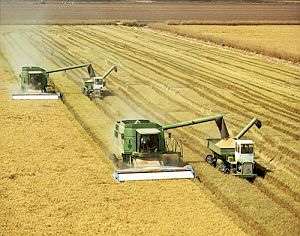
Organic matter levels tend to be reasonably well maintained under natural and semi-natural conditions where the nutrient cycle is unbroken. In circumstances where there is human intervention and there is a need to modify topsoils, as in farming land, the nutrient cycle is likely to be interrupted and amounts of organic matter decline. It is estimated that levels of organic matter can fall by up to 50 percent when arable agriculture replaces natural vegetation, such as grassland or woodland. In agricultural use, much of the crop is removed from the land, as in hay from the hay fields or grain from the fields of cereals, and there are less plant remains to enter the soil and be recycled. It is the responsibility of the farmer to maintain levels of organic matter but this is not always met.
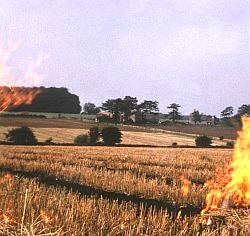 Thus in the past 60 years since the introduction of intensive farming there has been a measurable decline in organic matter levels in arable soils. Farmers have attempted to maintain nutrient levels by the addition of fertilisers and farmyard manures but on many farms farmyard manure is unavailable. The other assets of organic matter, such as good structure, are not usually provided by chemical fertiliser. Regular ploughing, frequent cultivations and use of some fertilisers have led to a decline in organic matter levels on many farms and this has brought about deterioration in soil structure. Granular and crumb topsoil structures have been replaced by coarser structures or even by complete loss of structure. This in turn restricts penetration of rainwater which instead flows over the surface causing soil erosion. Much of the increased soil erosion on farmland (See section on Soil Erosion) in the past 100 years can be linked to declining levels of organic matter.
Organic soils, or peat soils as they are sometimes called, are one of the main soil types of the world but they are also among the most fragile soils in the world. They have formed over hundreds of years in situations where the rate of decomposition of organic matter has been slower than its production. This is particularly the situation where the soil is, or has been, waterlogged for long periods of time. Some organic soils that have developed in lowland situations, like the ones in the Fenlands of Eastern England, are very fertile soils and give high yields of crops. Because of this, the areas containing these soils have been drained to remove the surplus water and the soils used to grow a range of arable crops, particularly vegetables. Unfortunately, they are also fragile soils in that they are easily oxidised and shrink through loss of water. They dry out on the surface and because they are light they are particularly prone to wind erosion. Their conversion to arable farming has led to a rapid decrease in the thickness of the peat soils. It is estimated that the area of Fen soils in England was 1480 sq km in 1630 but by 1985 had been reduced to 240 sq km., a loss of 84 percent. This loss is largely a consequence of drainage of the fenland and its use for arable farming and horticulture. There are also large areas of upland peat soils around the world but these are less suitable for agriculture and have survived, although some have been severely damaged by erosion.