
Managing organic matter
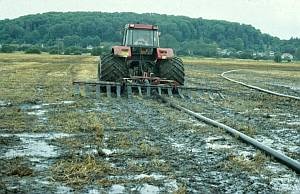
There are a number of ways by which the levels of organic matter can be increased in soils. One of the oldest is the use of farmyard manure which has several beneficial effects on soils including increasing the organic matter content. After being added to the soil surface the manure is ploughed into the soil thereby providing organic matter throughout 20-30 centimetres of the topsoil. It is a very good source of nutrients, especially nitrogen, potassium and phosphorus, and it also improves the waterholding capacity of soil and the quality of soil structure. The drawback to its use is that it is not widely available except in regions where cattle, pigs or poultry are kept and it is generally too expensive to transport it far beyond the farm boundaries where it originated. Sewage, both in the form of effluent and as the solid sludge bioproduct, has had a long history of being applied to land to provide nutrients and organic matter. It is more widely available than farmyard manure but its widespread use has suffered from the fact that, certainly in the early years, it added undesirable amounts of toxic heavy metals to the land. In recent years there has been increasing attention also given to the use of other waste to increase levels of organic matter, including sawdust, refuse, and paper.
There are also cropping practices in arable farming that can be used to reduce the loss of organic matter. One approach is to plant crops using much reduced tillage. Techniques include zero tillage in which the seeds are sown directly into the soil that has not been tilled since the harvest of the previous crop, and minimum tillage, which as the name implies, involves the minimum tillage necessary to form a seed bed. Reduced cultivation causes fewer disturbances to the soil and this leads to less loss of organic matter. A number of such measures are being used particularly in North America and to a lesser extent Western Europe. Other practices to maintain levels of organic matter include using rotations of crops. Thus instead of growing cereals year after year on the same field, the practice is that every third year or so, grass or legumes are grown. These are then ploughed into the topsoil where they enhance the organic matter levels and benefit the next crop of cereals. The drawback to this practice is that it is less economic for the farmer because a year of growing cereals is lost but in the longer term it helps to maintain a healthier soil.
Organic matter management has become a topic of major interest in the discussions on global climate change. The soil contains more carbon than the atmosphere and growing plants combined and hence is a large reservoir of carbon which can have a significant influence on climate change. There is much discussion currently on how the soil carbon source can be managed in a way that reduces its potential impact on climate change (See Section on Climate Change). The amount of organic matter in soils is influenced by soil type, land use and the prevailing climate and these factors govern the extent to which carbon is released to the atmosphere or stored (sequestered) in the soil. The aim is to store as much carbon as possible in soils without impairing their ability to continue with their important roles. Research is now being directed to how best to manage this important carbon supply.