Rivers and soil
Rivers can have an enormous influence on the rock and soil over which they flow. A river goes through several stages as it flows from its source towards the sea. Let's look at these stages in an imaginary river, with illustrations from various actual examples.
A young river
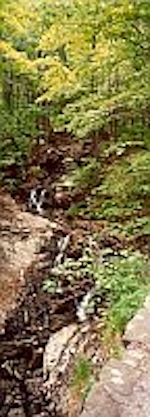
Rain falls on the soil and both runs across and drains through until it reaches an impermeable layer of rock beneath the surface. Sometimes this is not far down and a spring may develop where the impermeable rock is exposed at the surface.
This is something which can happen, for example, when rock strata is disturbed when mountain ranges form. So a young stream is formed.
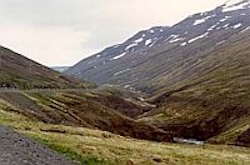
As it goes it will erode, or wash away, the soil in its path and will form a steep-sided valley. In times of heavy rainfall the flow of water will increase and as the river enlarges it has the power to wash away increasingly large stones and rocks, and may even cause landslides.
In winter snow and ice may also break up the surrounding rock and add to the material carried away by the water.
The middle sections of a river
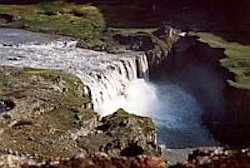
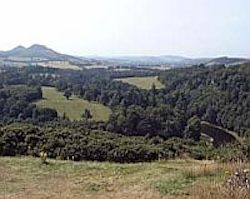
As the river reaches flatter ground it is likely to slow down and widen. The water has the power to grind stones together, so that they break down into smaller and smaller particles. The river is now flowing through flatter more fertile land and it continues to collect mud and silt as it goes.As it is joined by other streams and rivers it increases in volume and carries more and more silt. This makes the flow slower and often the river will start to wind backwards and forward as it meanders across the flat plain.
In this stage it is liable to flood its banks in periods of prolonged rainfall. As it does so, it drops some of the silt it is carrying and this forms rich alluvial soil, increasing the fertility of the "flood plain".
The lowlands and estuary
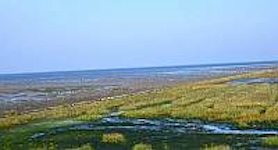
This is the final stage before the river reaches the sea. A large river will be carrying huge amounts of silt by now and due to the relatively slow speed of the flow, much of this is dropped. The river may break into a number of small rivulets each finding their own course out to the sea, forming a delta.The silt in between forms great mud flats whose fertility is destroyed where they lie below the tidal reach of the salty ocean. Such mud flats form important habitats for a range of bird life.