
Dune heathland
Sand dunes form when the wind blows dry beach sand on to the shore behind the beach. High winds tend to blow sand over the crest of the dune, dropping it on the inland side, and thus gradually the dunes extend further inland. As this process continues, new dunes are formed in front of the older ones and the older dunes get covered with less and less fresh sand. This gives an opportunity for a variety of specially-adapted plants to establish themselves on the sand. Their roots must be strong enough to withstand the wind and long enough to reach down through the sand to take in water from below the level of the sand. Plant adaptations include waxy substances on the leaves to reduce water loss and succulent leaves to enable the plant to store water.
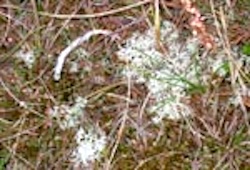
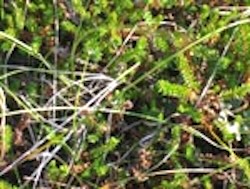
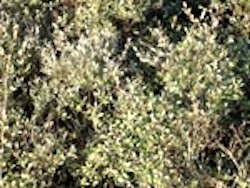
Plants establishing in the sandy soil
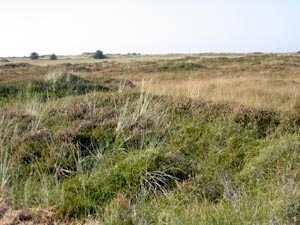 Some of the first plants to take hold are sand couch grass and marram grass, and these help to bind the sand together. As they grow over the years, a layer of soil gradually forms on top of the sand and this gives a purchase for a wider variety of plants. Lichens and mosses also establish, giving a firmer surface to the dune. These can dry out completely for long periods and then to absorb moisture and grow again at the end of a long dry period, so are good for helping to keep the sand together.
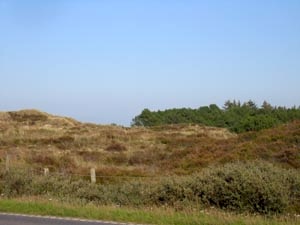 The developing sand is often very acidic and heather, bracken and gorse establish. Water tends to lie in the hollows, which are closer to the water table, and here dwarf willow varieties establish. At this stage the dune heathland provides a habitat for a wide variety of flowers, animal, bird and insect life. As more plants colonise and eventually die, the layer of soil becomes deeper, so that larger shrubs are able to survive. Conifers with the ability to survive the salty winds may establish themselves and indeed may even be planted intentionally. Gradually the area will become woodland, while new sand dunes will be forming along the sea edge.