Poppy seeds in the soil
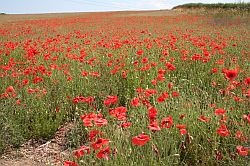
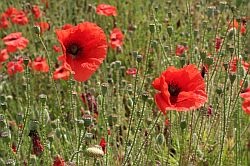
Many seeds will germinate the year after they fall into the soil, but some can lie dormant for many years and then may suddenly be sparked into germination by an unexpected occurence. A good example of this is the seed of the wild red poppy which can often be seen in relatively small clumps in the countryside, but which sometimes behaves in a very unexpected way.
Major disturbance of the soil
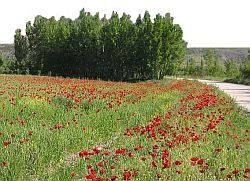 If the ground almost anywhere is very greatly disturbed, as for example when a new stretch of road is built, the following summer there will be a great flowering of poppies, colouring vast areas of the new verges bright red. The following year there will be a lesser number of flowers, then gradually the number of plants reduce back to the more usual scattering of clumps. The reason for this seems to be that any major disturbance of the soil will shock the seeds into germination - perhaps nature's way of making sure that the species will continue.
World War One
 The most famous example of this phenomenon was seen on the battlefields of the first World War in Flanders, when amid the appalling carnage, the disturbed earth turned blood-red with poppy flowers. The poppy is still worn on Remembrance Sunday each year in memory of the men and women who died amid the trenches there.
If you have any major building development taking place near where you live, look out for poppies the next summer. There must be an incredible number of seeds lying dormant in the soil for such a remarkable flowering to take place.
Conservation
Poppies are also often grown as one of the parts of a wildflower mix grown for conservation purposes. Such wildflowers encourage wildlife, particularly butterflys.