Moles and Molehills
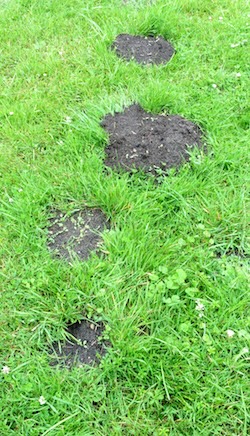
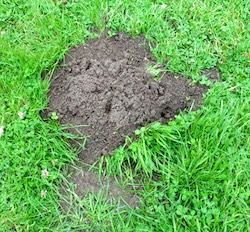
There are many creatures which live underground in the earth, and one which makes its presence very noticeable is the mole. You very rarely see a mole above ground but as these little creatures dig tunnels through the earth, they throw up molehills - which are very unpopular with gardeners. Often you can see the line of the tunnel from the line of molehills appearing in the grass above. These heaps of soil are the waste material as the mole builds its tunnels.
So what is a mole?
A mole is a small mammal about 16cm long, covered in velvety black fur. It has a pointed nose and tiny ears and eyes. The most noticeable thing about moles are their strong front claws which are ideally shaped for digging through earth. It lives on earthworms and also larvae which it finds in the earth. The tunnels are dug as a means to catch earthworms, which may accidentally fall into a tunnel as they wiggle around. When this happens, the mole will usually kill and eat it, though it is able to paralyse the worms and store them to eat later. Moles live mostly alone but find a mate and breed in the Spring, when up to five young are born. At this time they excavate a large underground burrow for the young to be born in and to be raised until they are mature.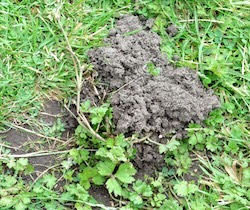
Molecatchers
Moles have always been a problem for farmers as well as gardeners and in past centuries many parishes employed a mole-catcher. One parish in Hampshire recorded: 'In 1862 Mr C. Randle was paid 2/3d for catching "moulds", in 1863 1/9d, and he was still hard at work in 1879 when he was paid 1/6d.' (Obviously the number of "moulds" varied from year to year, and they were not too good at spelling either!) Not only did the molecatcher try to keep down the damage caused by the moles, but the mole skins were prized for making waistcoats. Many skins were needed to make one garment but the soft velvety leather was much valued.An unexpected use for molehills
At the end of a burial service it is customary for a handful of earth to be scattered on the coffin, at the moment when the priest says 'earth to earth, ashes to ashes, dust to dust', Some funeral directors prefer to use soil from a molehill as it is particularly fine and free of stones or lumps.