
Brading Roman Villa
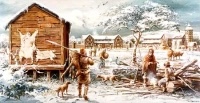
At first this was a farmstead, but later it developed to become a handsome courtyard villa with stone and wooden buildings on three sides of a central court or garden.
Brading Villa is particularly well known for the magnificent mosaic flooring, 'rediscovered' in 1879 by Mr. Munns, of Morton Manor Farm, and Captain John Thorp, a retired Army Officer living in the district. The site was first excavated between 1880 and 1884 and then re-excavated between 2002 to 2004.
As the Villa originally fell into disuse, it was covered over by vegetation and then ultimately by soil as the years passed. This protected and preserved the fabric and artefacts. It was only when archaeologists removed these layers of soil that they could learn how the site must once have looked and who lived there, and what their lives must have been like.
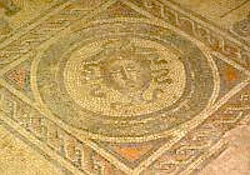
Without the blanketing layer of soil protecting these remains over the years, we would not today be able to gain such a keen insight into the lives of those who lived at Brading. For more information about this site, including some excellent educational resources, visit the Brading website.
Soil-Net would like to thank the Trustees of the Brading Roman Villa for their kind permission for the Villa to feature on this website.